The power of the horizontal plenum (crossflow)
08 Apr 2026
In classified areas, the protection of people or products is of importance. Preventing postoperative wound infections does not start only in the operating room, but also in a preparation room. In addition to many other possible causes of postoperative wound infections, the correct preparation of sterile instruments is of importance. In a preparation room, sterile instruments are unpacked and laid out for the surgical procedure. The environment plays a decisive role in the preparation and handling of sensitive products. A controlled, clean (HEPA-filtered) airflow is crucial.
Medexs is one of the few specialists in the Netherlands that develops and manufactures the horizontal plenum – also known as crossflow – in-house. In this blog, we explain what it is, how it works technically, what the benefits are, and what you should look out for in practice.
A crossflow system is an advanced air supply system specifically designed for the sterile unpacking and preparation of instruments in the preparation room for surgical procedures.
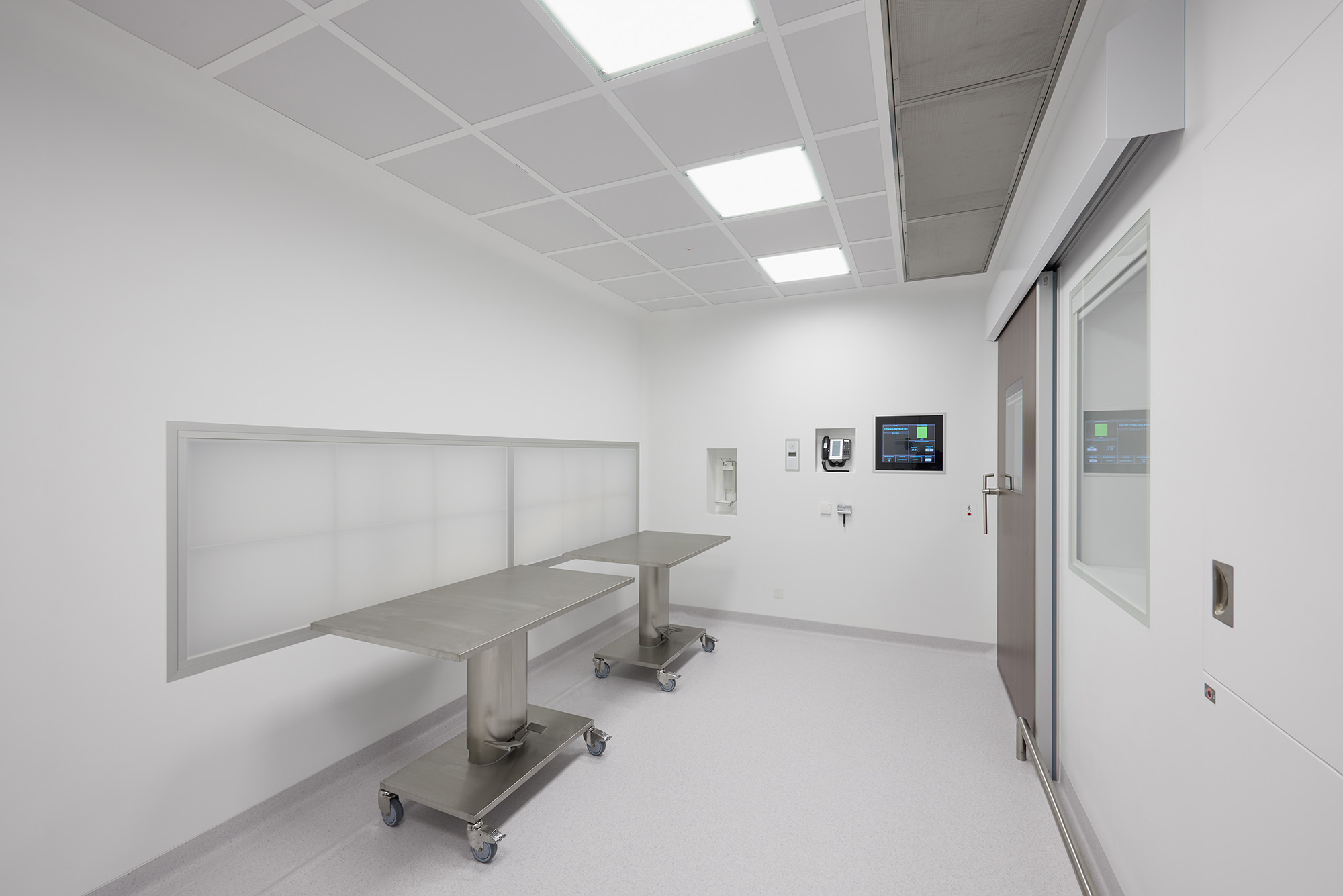
Whereas a traditional plenum is installed in the ceiling (Unidirectional Airflow (UDAF), also known as a downflow system), a crossflow system is integrated horizontally into the wall of the preparation room. The horizontal crossflow system supplies horizontal HEPA-filtered air over the instrument tables. The air velocity from the system is approximately 0.35–0.45 m/s. This horizontal, low-turbulence, unidirectional airflow protects the instruments placed on the preparation tables from their surroundings. This reduces the chance of microorganisms ending up on the sterile instruments.
Although a ceiling plenum was the standard in the past, a horizontal crossflow system is now often chosen. The system is used in hospitals and clinics, as well as in laboratories and the pharmaceutical industry.
Why choose a crossflow system? The choice for a horizontal plenum is made due to:
• the energy-saving potential:
o the total air volume is lower than that of a ceiling plenum.
o no temperature difference is required between the introduced air and the environment, as is the case with a ceiling plenum.
o the recirculation system can be switched on or off when the surface area is not in use.
• the possibility of decentralized recirculation due to lower air volume, resulting in:
o less (large) ductwork required from the technical room to the surface area.
o no recirculating air handling unit required in the technical room; the recirculation units are placed in the surface area itself.
• the stability of the airflow: a stable airflow is created due to the higher air exit velocity from the crossflow system.
• no edge shielding is necessary to guide the airflow, as is often used with a UDAF system.
• the system is suitable for an SRI/FMS Class 1+ or Class 1 surface area.
What does our crossflow system look like?
Our horizontal crossflow plenums consist of a stainless steel UDAF system mounted on a table structure, behind a false wall. The complete system installed in the assembly area contains all essential technologies:
• Cooling coils (optional, depending on the internal heat load and system size).
• Recirculation modules equipped with fans with their own controls.
• a stainless steel intake plenum in the ceiling equipped with a pre-filter and connection for the fresh air component.
• HEPA filters with special gel seals (100% leak-free).
• Air distributors for a controlled horizontal airflow.
• Ducting and silencers on both the intake and discharge sides of the fan.
• Impact protection to protect the air distributors.
The fresh air supply from the central air handling unit is mixed with the return air from the room via the intake plenum. This mixed air is drawn in by (multiple) energy-efficient fans and discharged horizontally through the UDAF system equipped with HEPA filters and an air distributor. Thanks to the option of incorporating an integrated cooling coil (15–19 °C) (optional, dry cooling) into the system, the air is brought to the required room temperature in the event that the internal heat load is (too) high.
Expertise in operation: What should you look out for?
A high-quality system only functions optimally if the environment and staff behaviour are also aligned with it. Based on our practical experience, we share the key considerations regarding the use of the horizontal crossflow plenum.
Precision in the setup
Table height
The instrument tables in the preparation area or workbenches in a preparation room must fall within the discharge field. Therefore, we agree on the table specifications with the client and the staff of the operating room complex in advance.
Free passage
No objects that disrupt the airflow must be placed between the wall and the instruments or products. In a preparation room, even a loose sterile cloth can influence the flow if it hangs in front of the airflow (i.e., the system’s discharge opening).
Human behaviour as a critical factor
Position of employees
The sterile-clad employee stands directly in the airflow in a preparation room to unpack. They, too, must ensure that they do not block the airflow. The non-sterile assistant must not perform actions, such as unpacking instrument trays, directly in front of the system’s discharge opening.
Control of movement
Rapid movement or ‘flapping’ causes air turbulence that creates unwanted airflows. Calmness, controlled work, and discipline are essential for maintaining a ‘sterile’ zone/environment.
Sustainability and maintenance
Smart energy use
Our systems are intelligent and can be switched off at lower speeds or turned off when the room is not in use, for example. This allows the system to be switched off or run at a lower speed at night or during the weekend. The system is also linked to the building management system (BMS).
Wall protection
In a preparation room, heavy stainless-steel tables are used intensively. Therefore, we install special stainless steel impact protection in this situation. This prevents damage to the wall or the air distribution curtain when positioning the instrument tables.
Conclusion
A horizontal crossflow system is an autonomously operating, high-quality technical instrument that guarantees maximum sterility exactly where it is needed most. It is an energy-efficient system that saves energy compared to a traditional UDAF system.
At Medexs, we combine our know-how and advanced technology with a deep understanding of the workflow on the shop floor. True safety is only achieved when technology and practice align seamlessly.
Are you wondering if a horizontal crossflow system is the right solution for your renovation or new construction project? Or would you like to know more about the ideal positioning of employees in the preparation area? Feel free to contact our experts for tailored advice.
A sustainable home for every target group. Want to speak to one of our advisors?
Would you like to stay up to date with our developments? Then sign up to receive newsletters via the contact page
 +31 (0)348 47 90 90